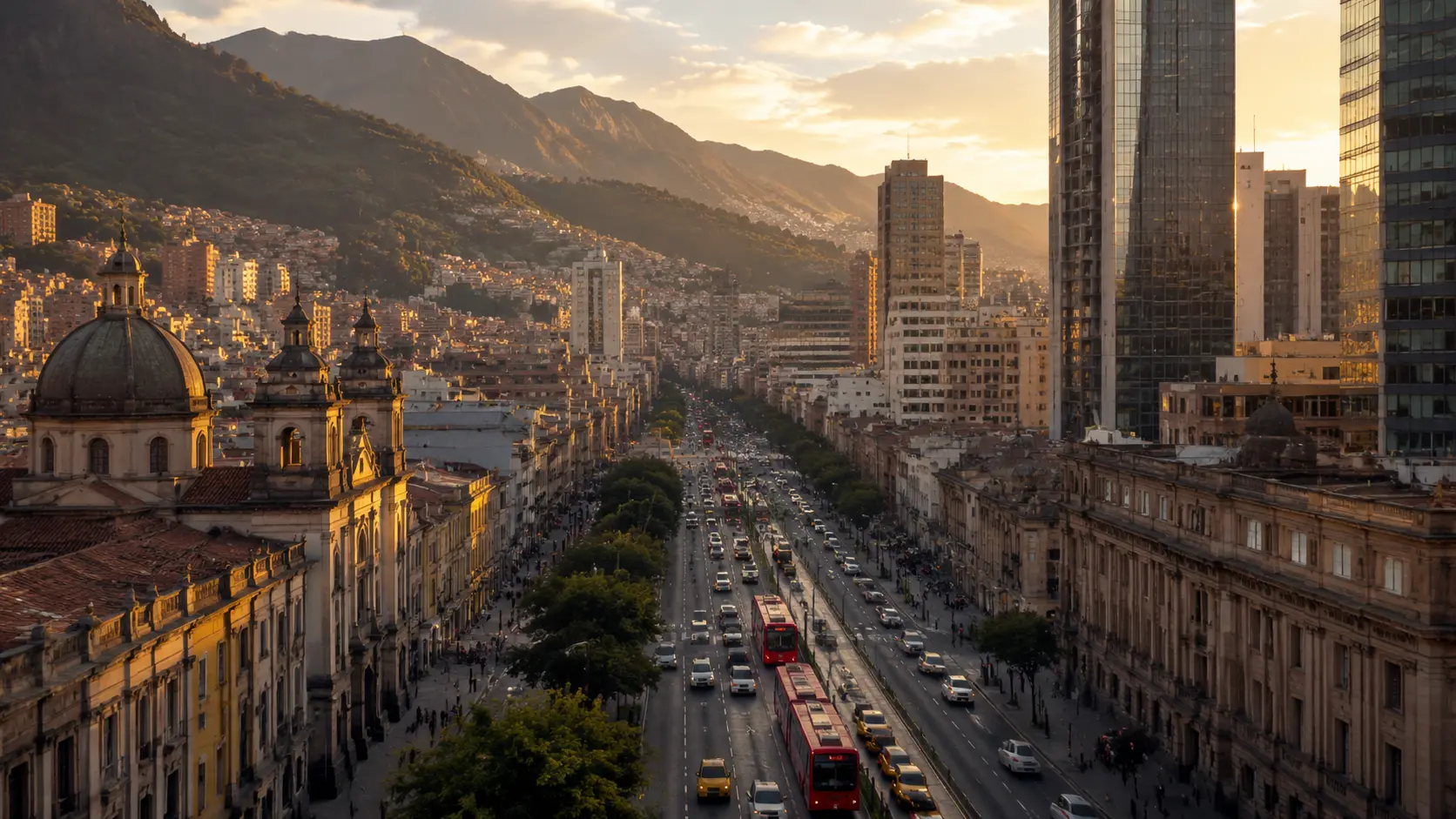
A city that's been waiting since 1942
If you're visiting Bogotá, you might notice something odd for a capital city of this size: a metro that's still under construction, decades after it was first proposed. The first formal proposal for a Bogotá metro dates back to 1942, according to Wikipedia and Portafolio. That's not a typo — this is a project that predates most of the transit systems in neighboring capitals, and it's only now, more than 80 years later, actually being built. You can follow that construction, month by month, in the construction progress tracker.
A real attempt in the 1950s that ended with a resignation
The first serious effort came in the mid-1950s, under President Gustavo Rojas Pinilla, when the government tried to contract studies for the first line. The project never got built: it was abandoned after Rojas Pinilla resigned in 1957 amid social unrest and protests against his government, according to Cambio Colombia. It was the first of several attempts that would stall — not for lack of a plan, but because of the political moment.
A 1960s metro that stayed on paper
In the early-to-mid 1960s, Mayor Jorge Gaitán Cortés proposed, between 1963 and 1966, a metro and a commuter rail line with a route running along Avenida Caracas, from Calle 22 sur to Calle 66 in the Chapinero district, according to Cambio Colombia and Spanish-language Wikipedia. The project was shelved once his term ended — a pattern that, as the metro's own history shows, repeated itself under later administrations: the idea survived from one mayor's office to the next, but the concrete project rarely did.
Funding and route: a disagreement that's crossed governments
Part of the historical delay comes down to friction between Colombia's national government and Bogotá's city government over two questions that resurface in nearly every attempt: who pays for which part of the project, and whether the line should run elevated or underground. That debate isn't just history — it's continued into recent years, including at one point during Gustavo Petro's presidency, when an underground segment was floated as a possibility, according to Portafolio and Cambio Colombia. Regardless of which side was right in any given round, the underlying pattern is the same one that shows up in the 1950s and 1960s attempts: a project that needs national and city government to agree in order to move forward, and one that has historically struggled to get there.
The funding that finally unstuck the project
The decisive financial push came in August 2018, when the World Bank approved an initial USD 70 million for the project, part of a larger USD 600 million request, to support early viaduct works, audits, and technical studies, according to the World Bank's own press release.
October 2020: ground finally breaks
Two years after that funding was approved, construction of Line 1 formally began in October 2020, with work on the train yard (patio taller), according to Empresa Metro de Bogotá. That's the point where, after generations of shelved proposals — 1942, the 1950s, the 1960s, and the decades of funding-and-route debates that followed — the city finally saw machinery on the ground instead of another plan on paper.
From 80 years of attempts to a project you can track in real time
Unlike earlier attempts, this one comes with a paper trail you can check for yourself: the construction progress tracker logs every official update, month by month, with a source for each figure. If you're wondering when you'll actually be able to ride it, the guide on when the metro opens walks through the projected dates — the test run and commercial opening — and why they're forecasts, not a locked-in promise.